


 Family Blood
Writer/Penciller: Kevin Vanhook
Inker: Dick Giordano
Colorist: Jade Moede
Cover: Joe Quesada, Dick Giordano, John Cebollero
Letterer: Jade Moede
Editor: Jorge Gonzalez
Published by: Valiant
Cover Date: March 1994
Cover Price: $3.50
We open on a flashback to the 1860s, on the man who would be known as the Eternal Warrior as he laments his inability to prevent the Mafia from gaining a foothold in the United States. The story then shifts to 1991, as we meet Angelo Mortalli–the man who has been tasked by the Mob to take down the Eternal Warrior. The two come together, and Mortalli believes he’s killed his target–not realizing the man’s nature. Not long after he’s framed for several murders that turn his family against him, and realizing he wouldn’t last on his own, turns himself in. Unfortunately for Mortalli, he becomes the subject of an experiment, as microscopic robots–nanites–are injected into him. When he’s released by a Geomancer, he has no memory of who he once was, but he’s become an ultimate survivor, proficient in all sorts of weaponry.
As I first read this issue, I wasn’t sure who the narrating character was; but I was pretty sure this was not the Shadow Man, nor Ninjak. As I sat down to write this review, it actually occurred to me this might be the Eternal Warrior–a character I know virtually nothing about, but by that name he sounds immortal and thus it would be reasonable to assume that his longevity lends to narrating this story. Having made that connection, I did a quick bit of research and confirmed it: I assumed correctly.
The story is pretty straightforward, introducing us to the various characters pretty quickly, setting up the situation, and moving us through the main points. We get a little bit of backstory as well as the ongoing insight of the Eternal Warrior’s narrative/knowledge of what happened, and we get to see bits of Mortalli’s life as a part of the mob and what he’s like as a person…which seems a stark contrast to the vigilante he would become as Bloodshot.
The art is pretty good–nothing negative, really, to say about it; it fits the story quite well and conveys what’s going on, making things easy to follow, and the issue as a whole flows quite nicely. I’m unfamiliar with Vanhook‘s art offhand, and it reminds me a bit of Barry Windsor-Smith, and the visual style of the entire art team has a look that–for me–screams “1990s!” This is not a bad thing, just an observation…and something that I think helped my enjoyment of the issue, as it looks and feels like the early/mid-1990s comic that it is.
I’m pretty sure this is the first-ever issue of “classic” Bloodshot that I’ve read–though I bought #1 when it came out, that was the dumb collector in me in the early-1990s, bought for the fancy cover and on the chance it’d be come THE “hot, new book.” I don’t recall buying this issue when it came out, though I’ve acquired several copies through the years out of bargain bins, specifically for the shiny cover and my having a thing for these chromium covers.
As something I don’t believe I’ve ever paid more than fifty cents for (so even with multiple copies, I’ve yet to pay a total of the 1994 cover price), this was an excellent issue. It’s given me the origin of Bloodshot (as expected, assuming going in that this was like the X-O Manowar #0 issue that did the same for that character), which–while it takes the mystery away–will likely inform my reading of the early issues of the series.
I approached this as a one-shot; just a lone single-issue I could read, to “sample” Bloodshot after all these years…but I found myself quickly drawn into the story, and by the end of the issue, I am very interested to get into the series proper and experience this original version of Bloodshot.
This is my first-read issue of Bloodshot (1992) but it’s my fourth Bloodshot comic overall–having already read the first three issues of the 2012 series. I can’t help but wonder how much the two inform each other–how much detail in the new series is actually drawn from the original, and how now reading the originals will affect my enjoyment of the new material.
As back-issue bargain bin comics go, if you can find this in a quarter, fifty-cent, or dollar bin, it’s a solid read and well worth picking up. Just beware it igniting an interest in the character and this series that might lead you to hunting a bunch of other issues to read more.
Story: 7/10
Art: 7/10
Overall: 9/10
Filed under: 1990s, Bloodshot, The '90s Revisited, Valiant | Tagged: 1990s, Bloodshot, Bloodshot #0, Bloodshot vol 1, Comic Reviews, Dick Giordano, Family Blood, Jade Moede, Joe Quesada, John Cebollero, Jorge Gonzalez, Kevin Vanhook, origin, Valiant, Valiant Comics | 1 Comment »

 I’m continuing to get drawn in, and the odd vocabulary elements are feeling a bit more normal. I’m liking the flashbacks that are fleshing out the present, and beginning to get a sense of the continuity that’s been built from the start of this series. You know something’s being done right when I’m interested in going back to re-read the issues so far just to appreciate the world that’s been built in such a short span of time. The story is engaging and the characters are easy enough to identify with. The art continues on a high note as well. Though I saw this issue’s end coming a couple pages early that ramped up the tension which made the cliffhanger both that much more appreciable and a bit anticlimactic, as if it ended a panel or two too soon.
 Three issues in, and I’m quite enjoying this series. Having figured out the art style for the flashbacks vs. the present, I quite enjoy the shifts, as we follow Bloodshot on his quest to find out the truth about his past. While he seeks his past, Project Rising Spirit is determined to remove him from the field permanently. The story kinda sucked me in on this issue; as said, recognizing flashbacks made this a much more enjoyable read and didn’t seem disruptive at all. I like both visual styles as presented here. As I keep saying, I’m enjoying this new take on a “classic” character; even knowing this isn’t the original “version” doesn’t bother me. Sort of a cross between Marvel’s Ultimate Comics line and DC‘s New 52, with the best of both worlds. Definitely looking forward to the next issue.
 The cover to this issue puts me in mind of a cover from the early issues of the Wolverine relaunch back in ’03 or so, where we see grumpy Wolverine on the ground, a line of bullet-holes across the wall–and him; and just looking at it, you know someone’s in for a world o’ hurt. Here, we get a look at the two title characters and a scene that kinda plays on the state of things, and (at least to me) comes off as rather amusing. Archer with a crossbow, pondering the Armstrong, who he’s shot umpteen times but calmly (cheerfully, even!) drinking a beer. With his parents’ reality revealed, Archer breaks from them and decides to join Armstrong, and the two begin their quest for the parts of The Boon that are scattered throughout the world. Of course, it wouldn’t be a quest if it was easy, and things sure don’t start easy for the pair. I really like this new take on the characters–it’s fresher and somehow seems a bit more realistic than the classic. I also like that the title characters don’t spend the entire first arc or two against each other–I’m far more interested in how they handle things as a “team,” with such drastically different backgrounds, personality, and abilities. The story keeps me interested, and I like the art–and the character designs. This Armstrong looks younger–and more presentable–than the classic, and somehow, that brings more of a sense of “fun” to the title, amidst the darker, more serious elements.
 This issue introduces us to the Fugitoid–an alien scientist in a robot body. This issue as a whole is “the origin issue” for the Fugitoid, detailing the robot as well as Dr. Honeycutt, and the motivations that led to the Fugitoid’s situation. While the essense of the original origin is present, details have obviously been changed–and it works really well for me. The art’s pretty solid, and pulls off the “alien, yet similar to Earth” vibe. The story itself is good, though I found out after reading this that the issue spoils something from the next issue of the main TMNT title–though I didn’t feel like there was anything particularly revelatory, and actually thought this played off stuff we’ve already seen. We get a glimpse of an entire culture that works far better for me than their use in the classic cartoon–taking a campy, goofy concept and making it a valid, reasonable element for the current continuity. The issue ends with no ad for a next issue, and I’m unsure if there will be any more–the first collected volume was 4 issues, and this is the 8th–making another complete 4-issue volume. I hope these continue; as I’ve indicated before–I’d gladly keep buying this companion series to the main title, with different creative teams and spotlight characters.
 While the turtles are out searching for Splinter, they are ambushed by the Foot, who want revenge for the death of Shredder. While battling the ninjas, the turtles come across a strange building marked with the letters “TCRI”–which they recognize as the same as what was on the canister of goo that mutated them. When they investigate the building further, they find plenty of oddities, including the inhabitants of the building, and an alien device they’ve built that spells major issue for the turtles’ future. The story is fairly simple, and things kinda scoot along quickly. This is still early in the existence of the TMNT, so for me it’s more the ideas that were put forth than actual grace in execution of the story. The art’s solid, and quite a contrast to contemporary takes on the characters. Still, I like it, and it’s really cool to see this colorized in a single-issue format; if I didn’t know it started out black-and-white and had no attention called to it, I’d have a hard time believing this wasn’t a color comic to begin with. Despite the various collected volumes already out, I hope this Color Classics series lasts long enough to re-present the entire Mirage vol. 1 TMNT series…though I wouldn’t entirely mind if it skips a bunch of the middle stuff and just re-presents the “core” Eastman/Laird stuff of the first 11 issues, Micro-Series, Return to New York, and City at War arcs.
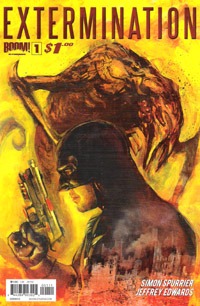

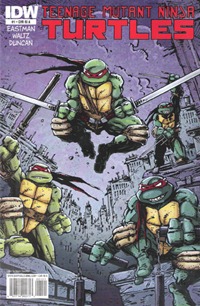
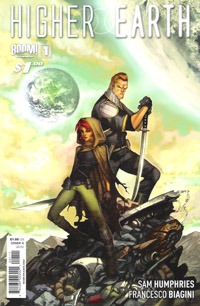
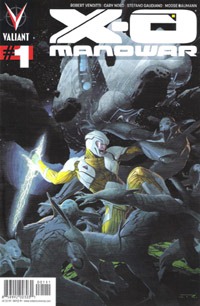
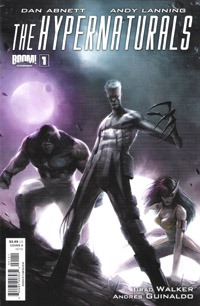


 It wasn’t all that long ago that I got pulled in to the revival of Solar, Magnus, and Turok from Dark Horse and their Free Comic Book Day special that year. I credited (if only to myself) some of that to the retroactive nostalgia I had for the old Valiant titles, though these revivals were far closer to their original incarnations than the licensed Valiant versions from the early 1990s.


 Comic Reviews by Walt